
*This post may contain affiliate links for which I earn commissions.*
We all carry tension in our bodies, especially as life gets busier and our schedules more demanding. Stiff shoulders, tight hips, or sore lower backs can make simple daily movements feel uncomfortable, and yet, so often, we put our own well-being last. It’s easy to think you need a professional massage to feel relief—but the truth is, you can nurture your body at home with a few simple self-massage techniques.
Self-massage is a gentle, practical way to release muscle tension, improve circulation, and cultivate a moment of mindful self-care. It’s not about perfection or intense pressure; it’s about listening to your body and easing the areas that feel tight or sore. In this post, I’ll share five approachable techniques you can try today, plus some tools that make self-massage easier and more effective.
By the end, you’ll have a small, sustainable routine to help reduce tension, boost mobility, and feel calmer in your body—without needing to book a massage appointment.
Shoulder and Neck Release with Massage Balls
The shoulders and neck are common tension hotspots, especially if you spend long hours at a desk. A simple massage ball can be your best friend here.
How to do it:
Place a small massage ball (like a lacrosse or spiky massage ball) between your shoulder blade and a wall.
Gently lean into the ball, adjusting your body so it presses on tight spots.
Move slowly in small circles or up and down for 1–2 minutes on each side.
Breathe deeply and notice any areas that feel particularly tense.
Tip: A soft oil, like a natural grapeseed or jojoba oil, on your shoulders can help the ball glide smoothly, enhancing comfort and effectiveness.
The other technique that would really help the upper back is by opening up the chest muscles as the ‘pecs’ are the muscles that pull the shoulders forward, creating the pain in the upper back. I used to sit at a desk for 8 hours a day and would sometimes feel a burning sensation between my shoulder blades. As well as massaging this area, simple chest stretches were a game changer for me.
Lower Back and Spine Soothing with a Foam Roller
Many of us carry tension in the lower back, whether from long commutes, standing for long periods, or everyday stress. Foam rolling can gently ease these areas while improving spinal mobility.
How to do it:
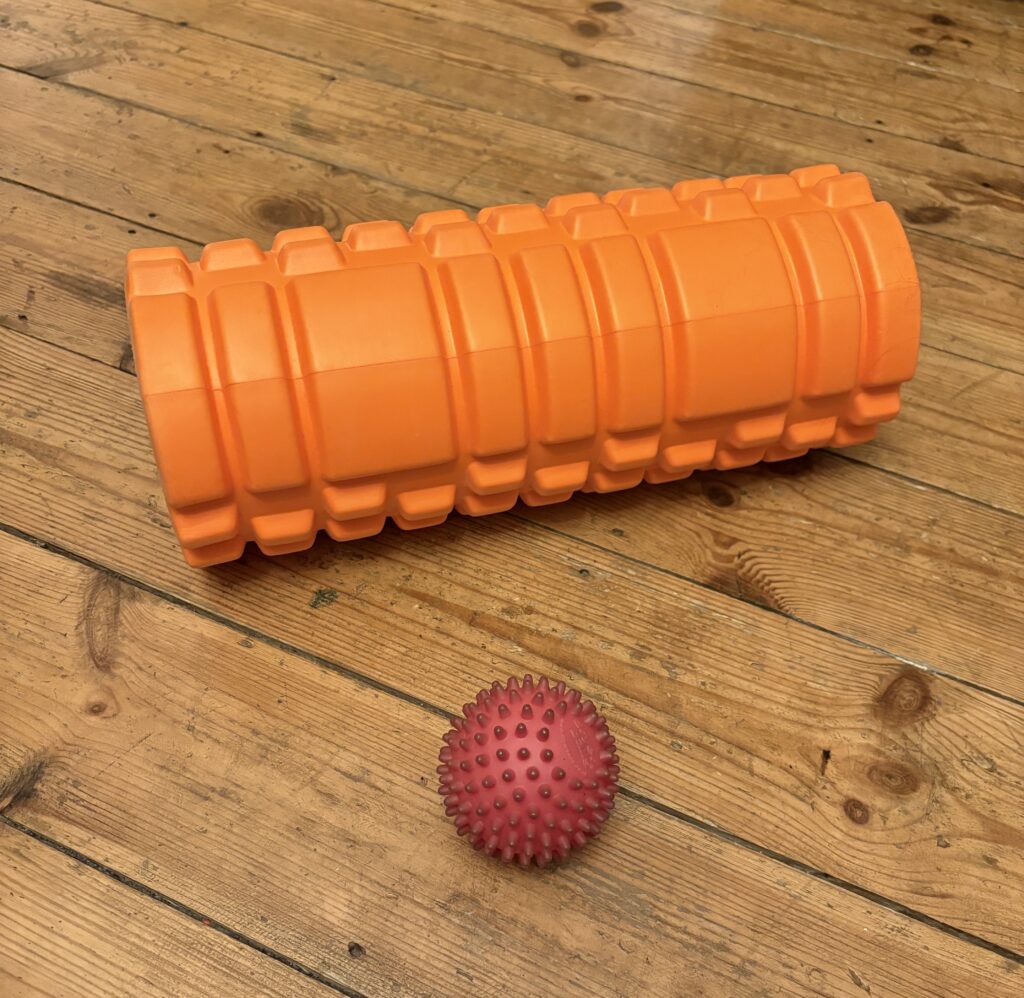
Tip: Focus on breathing and relax your muscles as much as possible. This is not about deep pressure but steady, mindful release. You can also lie on the foam roller with it positioned lengthways down the spine, allowing the arms to fall out on either side. This is another way of opening out the chest to release tension in the upper back.
Calf and Foot Relief with Hand Massage
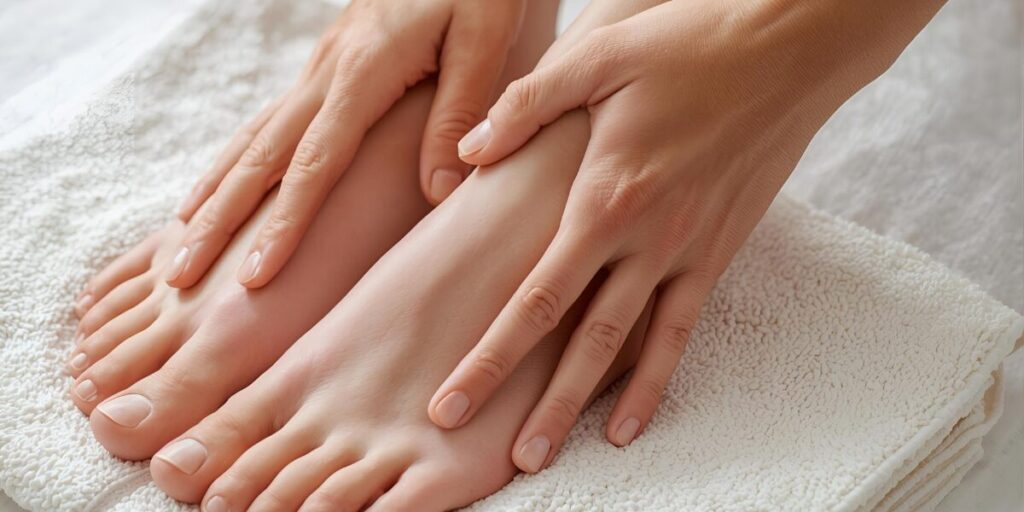
Tight calves and sore feet are common, especially if you’re on your feet a lot or wearing shoes that don’t offer much support. Your hands can do wonders for these areas without needing any equipment.
How to do it:
Tip: Use a nourishing oil, like sweet almond or coconut oil, to make the massage more soothing and provide more slide and glide. I suffered a bit from plantar fasciitis which used to make my calfs feel tight. Massaging under the soles of the feet helped release the calf muscles.
Hand and Forearm Tension Release
Our hands and forearms do so much work, whether typing, cooking, or lifting. A little daily massage can prevent discomfort and improve circulation.
How to do it:
Tip: Try doing this while watching TV or during a quiet moment in your day—it only takes a few minutes.
Gentle Face and Jaw Release
Tension often shows up in the jaw, temples, and around the eyes. Self-massage can be wonderfully relaxing and even help reduce headaches caused by stress.
How to try it:
Tip: A lightweight facial oil or roller makes the massage smoother and feels luxurious, turning a simple routine into a calming ritual.
A Simple Self-Massage Routine to Try
Here’s a quick, beginner-friendly routine you can try at home, taking around 10–15 minutes:
Shoulders & Neck: 2 minutes with a massage ball against a wall.
Lower Back: 2–3 minutes foam rolling along the spine.
Calves & Feet: 2 minutes each leg using hands or massage balls.
Forearms & Hands: 2 minutes, kneading and rolling.
Face & Jaw: 2 minutes using fingertips or a facial roller.
Tips for success:
Self-massage is a gentle, empowering way to take your wellness into your own hands. With just a few tools and a little time, you can release tension, improve circulation, and create moments of calm in your day. By making these small, consistent gestures a habit, your body—and mind—will feel more relaxed, balanced, and ready to move freely.
Remember, the goal isn’t perfection or a “pain-free” ideal—it’s nurturing your body with awareness and kindness. Start small, notice the difference, and enjoy the simple art of self-care at home.