
*This post may contain affiliate links for which I earn commissions.*
As we move through our 40s and 50s, strength becomes less about sculpting a certain look and more about supporting the life we want to live. We want to carry shopping bags without aching, get up from the floor easily, feel steady on our feet, and move through daily life with confidence. Yet many women hesitate to start strength training because it sounds complicated — heavy weights, gym memberships, intimidating equipment, or long workouts that don’t fit into real life.
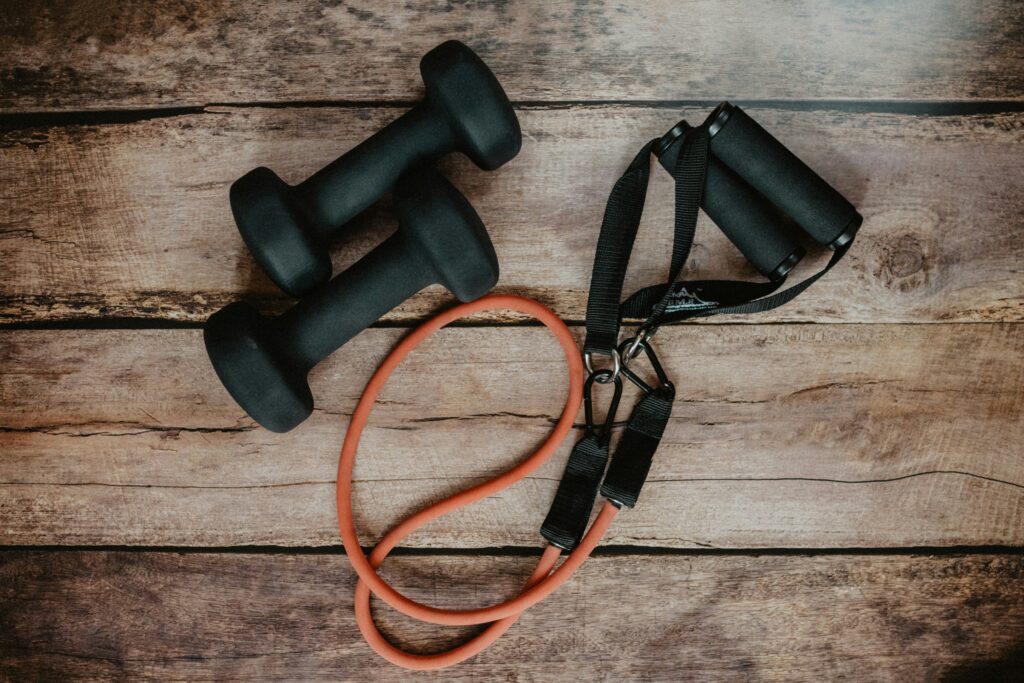
But here’s the truth: strength training doesn’t need to be intense or overwhelming. You don’t need a gym, a strict routine, or a high level of fitness to begin. Small, consistent movements using your own bodyweight — and perhaps a pair of light dumbbells or a resistance band — are enough to build steady, functional strength in midlife.
In this guide, we’ll explore gentle, effective strength exercises you can do at home. You’ll learn why strength is essential during perimenopause and beyond, how to keep things simple, and how to start with a routine that feels doable, not daunting.
Why Strength Training Matters More in Midlife
Women often experience shifts during perimenopause that make strength work even more important. Hormonal changes affect muscle mass, bone density, and balance. Many women notice fatigue creeping in more easily, joints feeling less stable, or simple tasks feeling slightly harder than they used to.
Strength training helps counter all of this — gently and naturally.
It supports:
And perhaps most importantly, it helps you feel grounded and capable in your own body.
You don’t need intense HIIT sessions or heavy barbell lifts. A calm, consistent approach is more than enough to create meaningful change.
Start with Your Bodyweight: The Safe, Gentle Foundation
Before thinking about equipment, your own body is the best place to start. Bodyweight exercises are kinder to joints, easy to modify, and ideal if you’re easing back into movement after a break.
Here are a few simple movements that build full-body strength:
1. Wall Push-Ups
A gentle way to strengthen chest, arms, and core without pressure on the wrists or neck.
Start with hands at shoulder height, step back slightly, and exhale as you press away from the wall.
2. Sit-to-Stand
A practical strength builder for the legs and glutes.
Use a chair and stand up with control, without using your hands if possible.
This translates directly into everyday strength — getting out of chairs, climbing stairs, and lifting.
3. Standing Hip Extensions
Helps support glute strength and lower back comfort.
Hold onto a counter for balance, keep the chest lifted, and gently extend one leg behind you without arching your back.
4. Incline Plank
Place your hands on a stable surface like the edge of the sofa or kitchen worktop.
Engage your core gently and hold for 10–20 seconds.
Bodyweight work is a wonderful starting point because you can feel your muscles working without feeling overwhelmed. It helps you build awareness, control, and confidence.
Adding Light Equipment: Small Tools for Big Results
Once you feel comfortable with bodyweight exercises, adding a few simple tools can help you progress gradually without strain.
Resistance Bands
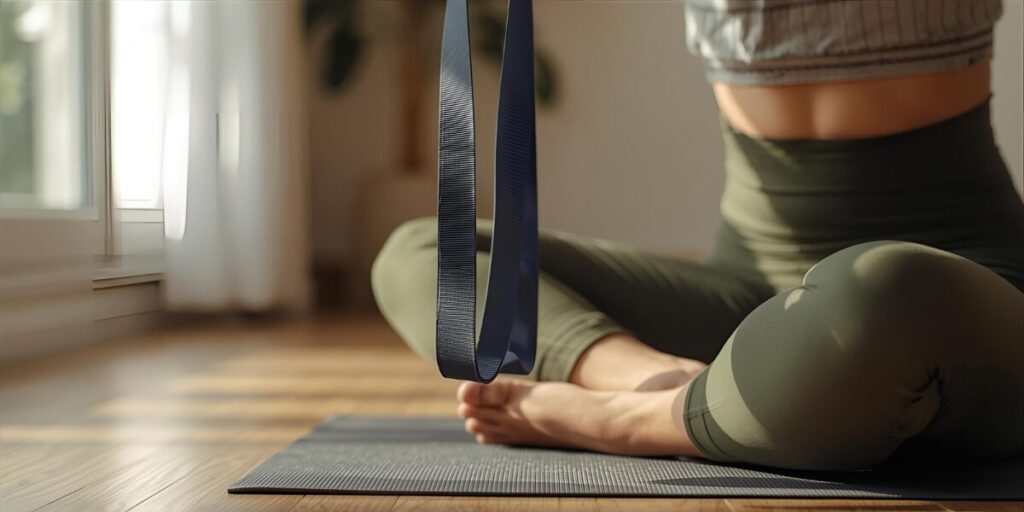
These are excellent for midlife strength work because they’re gentle on the joints and offer support as well as challenge.
You can use them for:
A medium-strength loop band is ideal for beginners.
Light Dumbbells (1–2 kg)
Perfect for upper-body strength, especially if you want to support healthy posture during long hours of sitting or desk work.
They’re especially useful for movements like:
Choose a pair that feels manageable — you should be able to move slowly and with control.
Soft Pilates Ball
A soft ball is brilliant for adding core support and pelvic floor engagement.
It can also be used under the mid-back for assisted mobility.
A Cushioned Mat
Not exactly “strength equipment,” but essential for comfort.
A soft mat makes floor work enjoyable and invites you to return to your routine consistently.
These tools don’t take up space and are gentle enough to use daily. They also keep your routine varied, interesting, and supportive.
A Simple at-Home Strength Routine (10–12 Minutes)
Here’s a gentle, achievable routine you can try at home — perfect for beginners or anyone returning to movement.
1. Warm-Up (1 Minute)
- March on the spot
- Roll your shoulders
- Take a few deep breaths to soften tension
2. Sit-to-Stand (10–12 Reps)
Feet hip-width apart, stand slowly, sit slowly.
Try to keep the movement smooth and controlled.
3. Wall Push-Ups (8–12 Reps)
Step your feet further out for more challenge.
Exhale as you press away from the wall.
4. Resistance Band Rows (10–12 Reps)

Hold a long band securely around a post or heavy table leg.
Pull the band towards you, squeezing the shoulder blades gently.
5. Standing Hip Extensions (8–10 Each Side)
Keep your back long and steady.
Feel the glutes activating without tipping forward.
6. Light Dumbbell Shoulder Press (8–10 Reps)
Use 1–2 kg weights or even filled water bottles.
Press slowly, exhaling as the arms lift.
7. Core Support Using a Soft Pilates Ball (5–8 Breaths)
Place the ball between your knees while lying on your back.
Gently squeeze as you engage your lower belly on the exhale.
8. Cool Down (1–2 Minutes)
- Roll down through the spine
- Open the chest gently
- Finish with a long exhale
This routine can be done 2–3 times a week. Slow, controlled movement is more effective than rushing.
Tips for Making Strength Training Sustainable in Midlife
Start smaller than you think.
Five minutes counts. A single set counts. Consistency matters more than volume.
Focus on form, not intensity.
Gentle, controlled movement is kinder to joints and deeply effective.
Pair strength with breathwork.
Exhale on the effort — it helps your core activate naturally.
Keep tools visible.
Leave your dumbbells or resistance band where you can see them. Out of sight often means out of mind.
Celebrate micro-wins.
Feeling steadier on one leg, carrying a heavier bag, sleeping better — these are real results.
Conclusion
Strength training in midlife doesn’t have to be complicated. With a few gentle movements, a couple of small tools, and a consistent approach, you can build strength that supports your everyday life — strength that helps you feel grounded, capable, and at home in your body.
Remember: your strength journey isn’t about perfection. It’s about showing up with kindness, listening to your body, and choosing movements that feel supportive rather than draining.
If you’d like to explore more ways to strengthen your body gently, there are plenty of beginner-friendly guides waiting for you in the Movement & Strength section of La Vita Calma.
Photo by Kelly Sikkema on Unsplash